
Winter is harder than summer for a lot of families. The days are short, the usual outdoor routine falls away, and indoor places are crowded and loud exactly when you need them to be neither.
North Carolina has a few genuinely good options, and the best of them are booked well in advance or free. This guide covers what is available this winter, what makes an indoor outing work, and what to do on the days you stay home.
If you are new to the area or looking at support closer to home, our teams work with families across North Carolina.
Camp Royall: Book This Now
Camp Royall in Moncure is run by the Autism Society of North Carolina and describes itself as the nation’s oldest and largest camp for people with autism. It serves campers from age 4 to 104 and runs year round, not only in summer.
Winter dates currently on the calendar:
- Mini Camp Weekend: 6 to 8 November 2026
- Adult and Teen Retreat Weekend: 20 to 22 November 2026
- Girls Retreat Weekend: 4 to 6 December 2026
- Winter Camp Week 1: 28 December 2026 to 2 January 2027
- Winter Camp Week 2: 4 to 9 January 2027
That Winter Camp week over the New Year is the one families tend to want most, because it covers the stretch of school holiday that is hardest to fill.
Fees are not published on the calendar, so apply or call 919-542-1033 for current costs. ASNC has historically offered scholarships and payment plans, and it is worth asking rather than assuming the cost rules you out.
The NC Museum of Art Is Built for This
The North Carolina Museum of Art in Raleigh has done more preparation for autistic visitors than most venues, and the core of it costs nothing.
Entry to the People’s Collection in both buildings is free, and so is the Museum Park. Before you go, you can download their Neurodiversity Guide, available in English and Spanish, which walks through the campus, both buildings and the park. They also publish printable visual schedules for each building, the park and special exhibitions, described on their own site as intended for people on the autism spectrum.
Noise-cancelling headphones and earplugs are available on request at the Tickets and Information Desk in the East Building. They also run occasional Sensory-Friendly Hours with quieter conditions, so it is worth checking their calendar before choosing a date.
Being able to show your child the building before you arrive, and knowing headphones are waiting if the room is louder than expected, removes most of what makes a first museum visit go wrong. Our guide to noise-cancelling headphones covers what to bring of your own.
Finding Local Events Through ASNC
Beyond camp, the Autism Society of North Carolina runs more than 80 support groups covering more than 80 counties, and local groups frequently organise sensory-friendly outings and social events through the winter.
This is usually the best route to finding what is happening near you, because local volunteers know which venues in their area actually deliver on a sensory-friendly promise. Our post on finding an autism support group covers how to locate your county’s group.
What Makes an Indoor Outing Work
A few things separate an outing that goes well from one that ends in the car park.
Go at the quietest hour. First thing on a weekday morning in a museum or a soft play centre is a different place from Saturday afternoon. If your child is school age, a teacher workday is worth saving for exactly this.
Call ahead and ask two questions: when is it least busy, and is there somewhere quiet to go. Staff answer both readily, and knowing where the quiet corner is before you need it matters more than most planning.
Plan for a short visit and treat leaving early as a success. Forty good minutes beats two hours that end badly, and the next visit is easier when the last one finished well.
Bring what your child relies on. Headphones, a familiar snack, a comfort item.
Days You Stay Home
Most of winter is spent indoors, and the goal on those days is usually regulation rather than entertainment.
A quiet corner. Somewhere with cushions, a blanket and low light that your child can go to without asking. It works best when it is always there, not set up during a hard moment.
Scented playdough. Ordinary playdough with a few drops of a mild essential oil adds a sensory dimension to something many children already like. Skip it if your child is sensitive to smells, which plenty are.
Bubble wrap on the floor. Loud, physical, and satisfying for children who seek that kind of input.
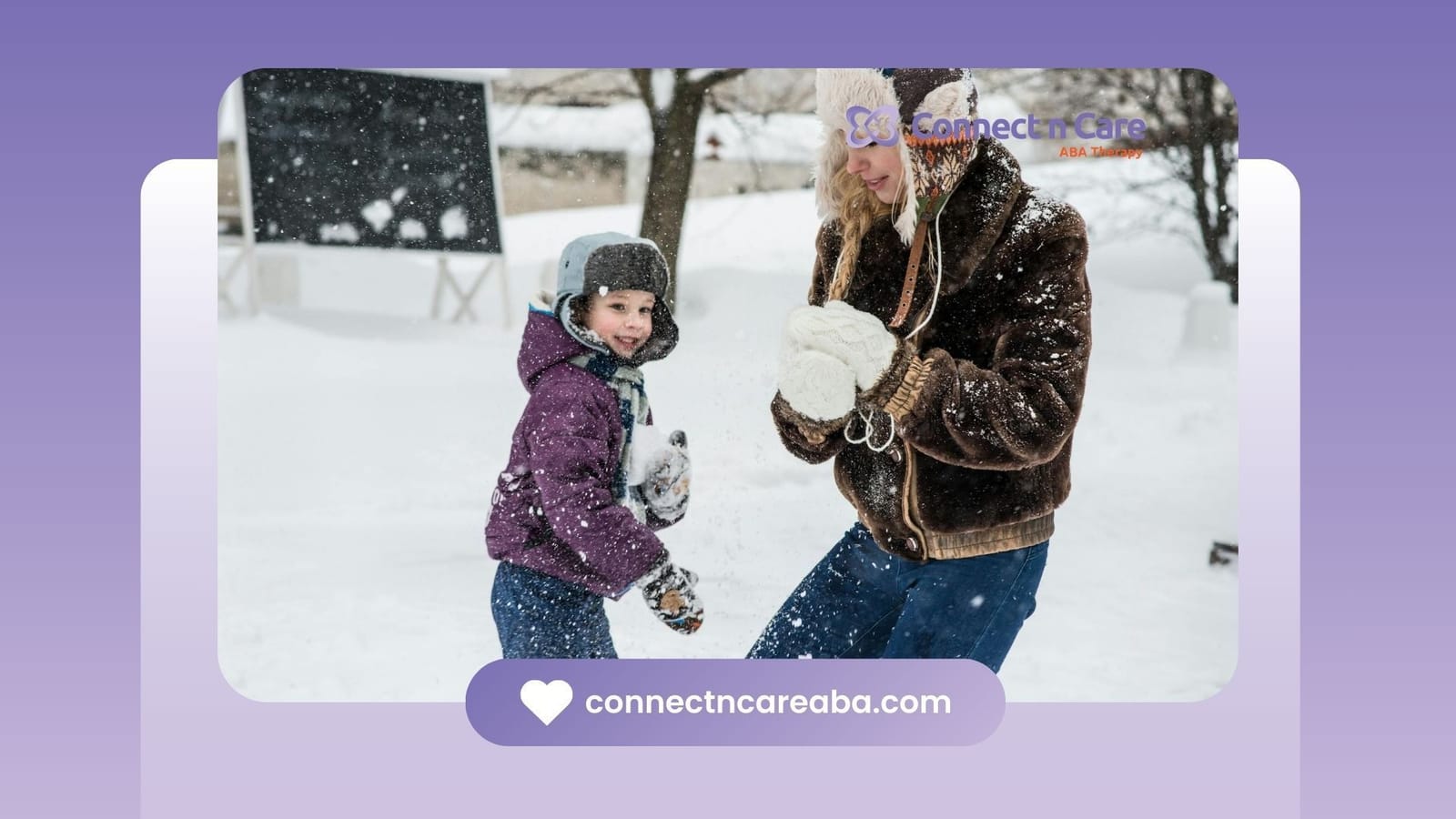
Indoor snowball games. Rolled socks or soft fabric balls, which gives you the game without the cold or the wet clothes.
Sensory bottles. A clear bottle with water, glitter and a few small objects, sealed firmly. Watching it settle is calming for some children and does nothing for others, and the only way to know is to try.
None of this needs to be elaborate. The value is mostly in it being predictable and repeatable on a grey afternoon.
Keeping Therapy Going Through the Break
School holidays break the routines autistic children often depend on, and families frequently notice behaviours resurfacing over a long winter break that had settled during term.
Therapy continuing through that period helps, and in-home sessions in particular can work on exactly the things the break disrupts. If you are weighing up whether to start or continue over the winter, our insurance and verification page covers how coverage is checked before sessions begin.
Our seasonal guide to autism-friendly July 4th activities covers the same ground at the other end of the year.
Conclusion
Finding suitable winter activities for kids with autism in North Carolina can help families maintain routines, encourage social interaction, and create enjoyable experiences during the colder months. From Camp Royall's winter programs and sensory-friendly visits to the North Carolina Museum of Art to simple indoor activities at home, there are options for different sensory needs, interests, and comfort levels.
The key is choosing activities that match your child's preferences, preparing for changes in routine, and allowing flexibility when plans don't go as expected. Even small, predictable activities can support emotional regulation, communication, and everyday skill development throughout the winter season.
Planning the Season
Winter in North Carolina does not have to mean twelve weeks indoors with nothing working. Camp Royall’s winter weeks are the single best thing on offer and need booking early. The NC Museum of Art is free and has done the preparation. Your county’s ASNC group will know what else is happening nearby. And on the many days when none of that is realistic, a quiet corner and a predictable afternoon are a perfectly good outcome.
Connect n Care ABA supports families across North Carolina through in-home ABA therapy, center-based ABA therapy and ABA parent training, including the routine disruption that comes with school holidays. .
To talk about what would help your family this winter, contact our team.
SOURCES:
- https://www.autismsociety-nc.org/camp-royall/
- https://www.autismsociety-nc.org/camp-royall/calendar/
- https://ncartmuseum.org/accessibility/
- https://autismsociety-nc.org/find-chaptersupport-group
- https://www.cdc.gov/autism/signs-symptoms/index.html